For small dairy businesses, entering yogurt production can be a practical way to add value to fresh milk and develop higher-margin dairy products. However, starting a yogurt business does not necessarily require a large industrial factory. With a properly configured small yogurt production line, small dairy processors can start with a manageable production capacity and gradually expand as market demand grows.
So, what does a small dairy business need to start yogurt production?
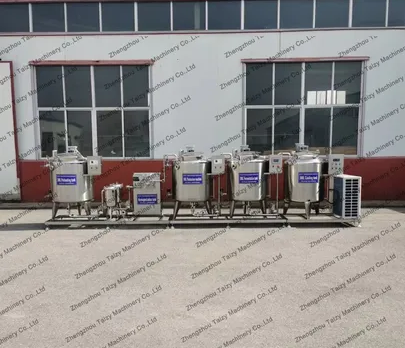
Why Is Yogurt a Good Choice for Small Dairy Businesses?
Yogurt has several advantages for small dairy processors. Compared with selling fresh milk alone, yogurt provides more opportunities for product differentiation.
A small dairy business can produce different types of yogurt, such as:
- Plain yogurt
- Fruit yogurt
- Flavored yogurt
- Trinkjoghurt
- Set yogurt
- Probiotic yogurt
Local dairy shops, supermarkets, restaurants, hotels, schools, and small food distributors can all become potential customers. This makes yogurt production suitable for businesses that already have access to fresh milk but want to increase its added value.
Another advantage is that yogurt production can be scaled. A business can begin with a small production capacity and add larger tanks, filling equipment, or additional processing equipment when sales increase.


What Equipment Is Needed for Small-Scale Yogurt Production?
A complete small yogurt production line normally includes several stages rather than a single machine. The exact configuration depends on the desired capacity, yogurt type, and level of automation.
A typical production process includes:
Fresh milk → Filtration → Pasteurization → Homogenization → Cooling → Fermentation → Stirring → Filling → Refrigeration
The main equipment may include:
| Geräte | Main Function |
|---|---|
| Milk storage tank | Stores and temporarily holds fresh milk |
| Pasteurisationstank | Heats milk to reduce unwanted microorganisms |
| Homogenisator | Improves the uniformity and texture of milk |
| Gärtank | Provides controlled conditions for yogurt fermentation |
| Cooling system | Quickly lowers the product temperature |
| Joghurtfüllmaschine | Fills yogurt into cups, bottles, or other containers |
| Refrigeration equipment | Keeps finished yogurt at a suitable storage temperature |
For a small business, not every machine needs to be highly automated from the beginning. A semi-automatic configuration can help control the initial investment while still providing consistent production.
What Should Businesses Consider Before Buying a Yogurt Production Line?
The machine price is only one part of the investment. A more important question is whether the equipment matches the company’s production requirements.
Produktionskapazität
Avoid buying equipment that is significantly larger than your current market demand. Excess capacity can increase investment and operating costs.
Product Type
A line designed for cup yogurt may require a different filling and packaging configuration from a line designed for drinking yogurt.
Automation Level
Semi-automatic equipment can be suitable for businesses with lower production volumes and more available labor. Automatic equipment becomes more attractive as production volume increases.
Material and Hygiene
Since yogurt comes into direct contact with the processing equipment, food-grade materials and hygienic design are essential. Stainless steel equipment is widely used in dairy processing because it is durable and relatively easy to clean.
Future Expansion
A small dairy business should also think beyond its first production stage. If sales are expected to grow, selecting equipment that can be integrated into a larger production system can make future expansion easier.
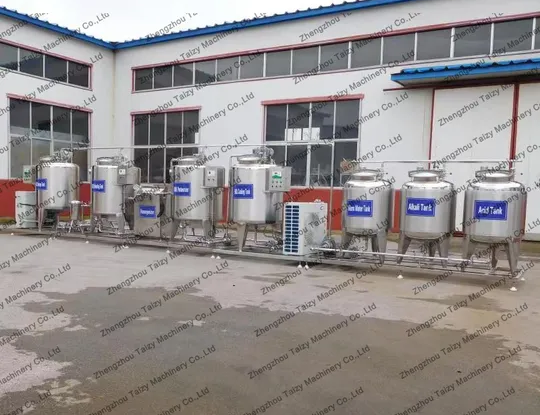
Start Small and Expand With the Market
For many small dairy businesses, the best strategy is not to build a large yogurt factory immediately. Instead, they can start with a small yogurt production line that matches their current milk supply and sales channels.
Once the business develops stable customers, it can gradually increase production capacity, add automatic filling equipment, introduce new yogurt flavors, or develop larger distribution channels.
This approach allows small dairy processors to control their initial investment while creating room for long-term growth.
Conclusion
Starting yogurt production does not always require a large-scale dairy factory. With the right small yogurt production line, a small dairy business can process fresh milk into higher-value products such as plain yogurt, fruit yogurt, flavored yogurt, and drinking yogurt.
For small dairy businesses looking to enter the yogurt market, starting with a properly designed production line can provide a practical foundation for building and expanding a local yogurt brand.