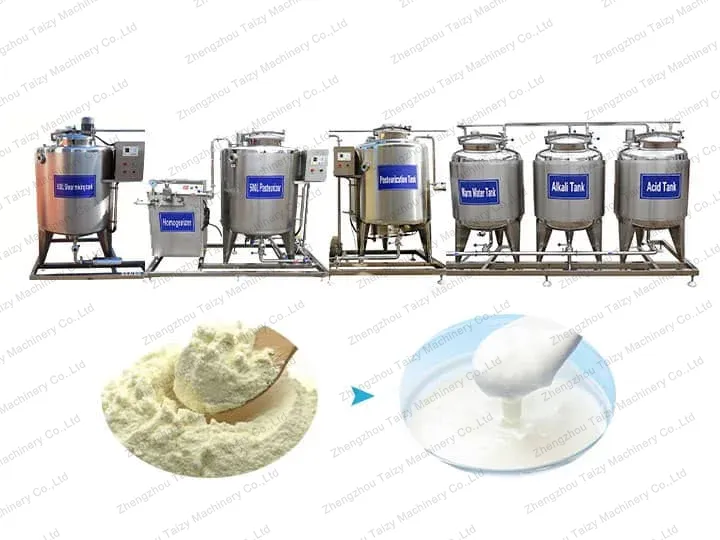
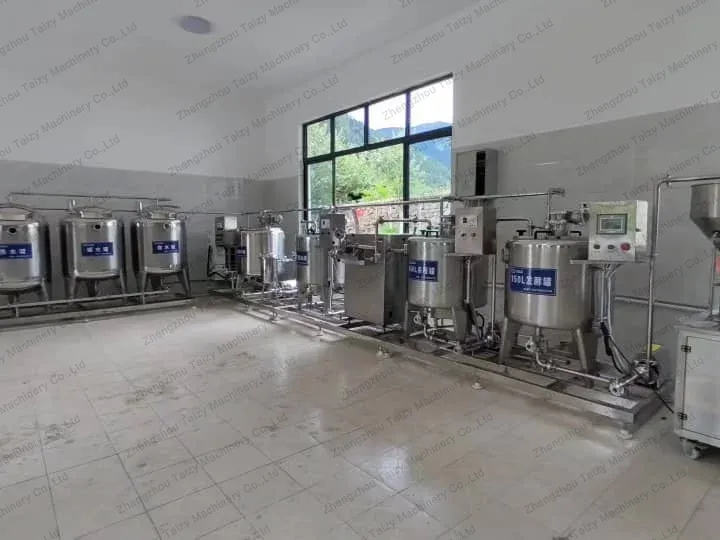
The yeniden yapılandırılmış süt yoğurdu üretim hattı offered by Taizy is designed to assist dairy manufacturers in establishing a small-scale yogurt production line, which utilizes milk powder as its primary raw material.
Afrika gibi gelişmekte olan pazarlarda, taze sütün nispeten kıt olduğu yerlerde, bu “süt tozu çözümü” ideal bir seçimdir.
Üretim Süreci Akışı: Tozdan Yoğurda
300L-500L toz yeniden yapılandırılmış süt yoğurdu üretim hattı, 6 aşamalı hassas bir süreç izler ve süt tozunu kaliteli yoğurda dönüştürür. Her aşama, tutarlı kalite ve optimal doku için kritiktir.
| Aşama | İşlem | Ekipman | Ana Parametreler |
|---|---|---|---|
| 1 | Karıştırma ve Ön Isıtma | Yüksek-shear Karıştırma Tankı | 50-60°C, 2840r/dak |
| 2 | Homojenizasyon | Yüksek basınçlı Homojenizatör | 20-25MPa, 500L/s |
| 3 | Pastörizasyon | Sterilizasyon Tankı | 85-95°C, 15-20 dakika |
| 4 | Fermantasyon | Fermentasyon Tankı | 42-45°C, 6-8 saat |
| 5 | Soğutma ve Doldurma | Soğutma Tankı & Doldurucu | 4°C, 800-1000 kupa/saat |
| 6 | Temizlik | CIP Temizleme Sistemi | Asit/Alkali yıkama |
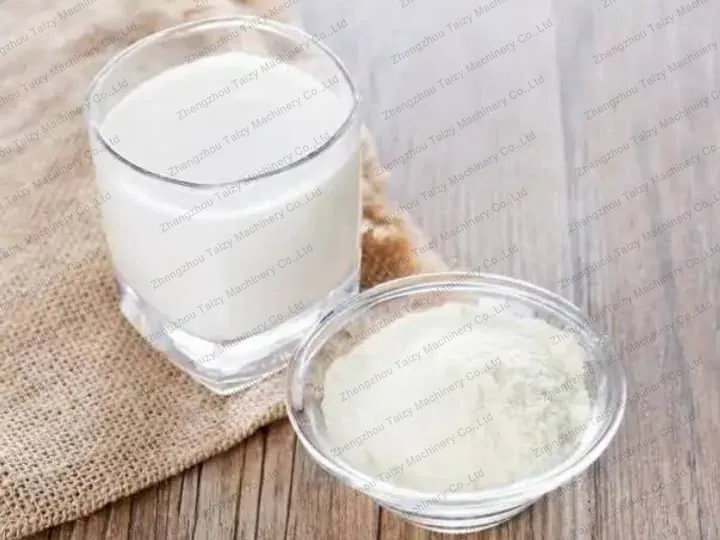
Aşama 1: Toz Ön Isıtma & Yüksek-Shear Karıştırma
The production begins with mixing milk powder and water in the high-shear mixing tank. This critical stage ensures complete dissolution of milk powder and a uniform mixture before further processing.
Process Description:
- Süt tozu, tank ile hassas su oranıyla eklenir
- Yüksek hızda karıştırma (2840 rpm/dak) tam çözünmeyi sağlar
- Isıtma sistemi, sıcaklığı 50-60°C'ye yükseltir
- Ön ısıtma, sonraki homojenizasyon verimliliğini artırır
Aşama 2: Homojenizasyon
The mixed milk enters the high-pressure homogenizer, which breaks down fat globules to create a smooth, uniform texture. This stage prevents fat separation and ensures a consistent mouthfeel.
Process Description:
- Süt, homojenizasyon valfinden 20-25MPa basınçla geçer
- Yağ globülleri 0.2-2μm boyutuna düşürülmüş
- Depolama sırasında krema ayrışmasını önler
- Doku ve ağız hissi tutarlılığını artırır
Aşama 3: Pastörizasyon (Sterilizasyon)
The homogenized milk enters the sterilizasyon tankı for high-temperature short-time (HTST) pasteurization. This stage eliminates harmful bacteria and ensures product safety.
Process Description:
- Süt, 85-95°C'ye 15-20 dakika ısıtılır
- Varlık bakterileri ve patojenleri öldürür
- Daha iyi doku için peynir altı suyu proteinlerini denature eder
- Sütü fermantasyon için hazırlar
Aşama 4: Fermantasyon
The pasteurized milk enters the fermentation tank, where lactic acid bacteria convert lactose to lactic acid, transforming milk into yogurt.
Process Description:
- Fermantasyon için sütü 42-45°C'ye soğutun
- Başlangıç kültürü ekleyin (Lactobacillus bulgaricus & Streptococcus thermophilus)
- pH 4.5-4.6'ya ulaşana kadar 6-8 saat fermente edin
- Fermantasyonu durdurmak için 4°C'ye soğutun
Aşama 5: Soğutma ve Doldurma
The fermented yogurt is cooled and filled into cups using an automated disk-type cup filler. This stage ensures consistent product weight and efficient packaging.
Process Description:
- Yoğurdu 4°C'ye soğutun
- Doldurma makinesi hassas hacmi kupalara verir
- Alüminyum folyo veya kapak ile otomatik kapama
- Çıkış: saatlik 800-1000 kupa
Aşama 6: CIP Temizleme Sistemi
The CIP (Clean-in-Place) cleaning system automatically cleans all equipment without disassembly, ensuring hygiene and efficiency.
Process Description:
- Süt kalıntılarını gidermek için suyla durulama
- Protein giderimi için alkali yıkama (NaOH çözeltisi)
- Mineral ölçek giderici (HNO₃ çözeltisi) için asit yıkama
- Temizlik maddelerini çıkarmak için son su durulaması
- Sıcak su veya dezenfektan ile sterilize edin
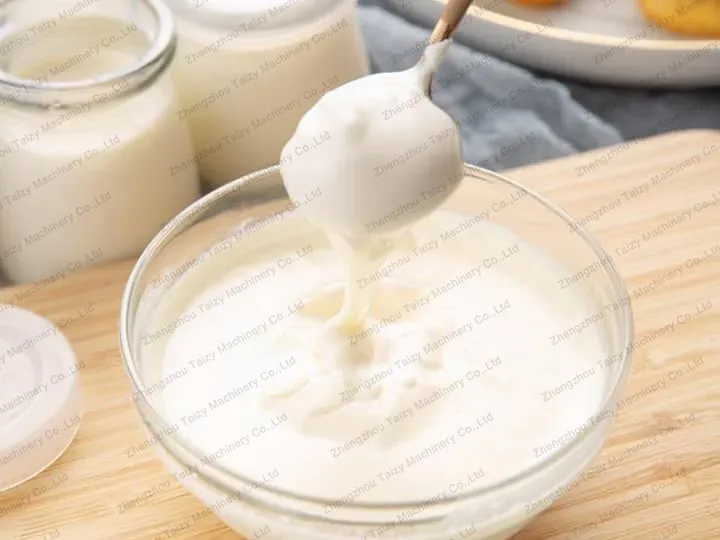
Yeniden yapılandırılmış süt yoğurdu üretim hattının tam ekipman listesi
300L Toz Yeniden Yapılandırılmış Süt Yoğurdu Üretim Hattı Ekipmanı
| Ekipman | Model/Boyut | Kapasite | Ana Özellikler |
|---|---|---|---|
| Yüksek-Shear Karıştırma Tankı | 300L | 300L/parti | 2840r/dak, 2.5m² ısıtma |
| Tek Filtre | Tek | – | 0.15m² filtrasyon alanı |
| Homojenizatör | 500L | 500L/saat | 25MPa maksimum basınç |
| Sterilizasyon Tankı | 300L | 300L/parti | 60-90°C, 0.55kW motor |
| Fermentasyon Tankı | 300L | 300L/parti | ±0.5°C doğruluk |
| Dolgulama Makinesi | Disk Tipi | 800-1000 kupa/saat | 50-300ml kapasite |
| Süt Pompası | 3 set | – | 0.37kW, 1t/h akış |
| CIP Sistemi | 300L | – | Asit/Alkali/Sıcak su tankları |
| Boru ve Vanalar | Özelleştirilmiş | – | Paslanmaz Çelik 304 |
500L Toz Yeniden Yapılandırılmış Süt Yoğurdu Üretim Hattı Ekipmanı
| Ekipman | Model/Boyut | Kapasite | Ana Özellikler |
|---|---|---|---|
| Yüksek-Shear Karıştırma Tankı | 500L | 500L/parti | 2840r/dak, 2.5m² ısıtma |
| Çift Filtre | Çift | – | 0.15m², 5t/h kapasite |
| Homojenizatör | 500L | 500L/saat | 25MPa maksimum basınç |
| Sterilizasyon Tankı | 500L | 500L/parti | 60-90°C, 0.55kW motor |
| Fermentasyon Tankı | 500L | 500L/parti | ±0.5°C doğruluk |
| Dolgulama Makinesi | Disk Tipi | 800-1000 kupa/saat | 50-300ml kapasite |
| Süt Pompası | 4 set | – | 0.37kW, 1t/h akış |
| CIP Sistemi | 500L | – | Asit/Alkali/Sıcak su tankları |
| Boru ve Vanalar | Özelleştirilmiş | – | Paslanmaz Çelik 304 |
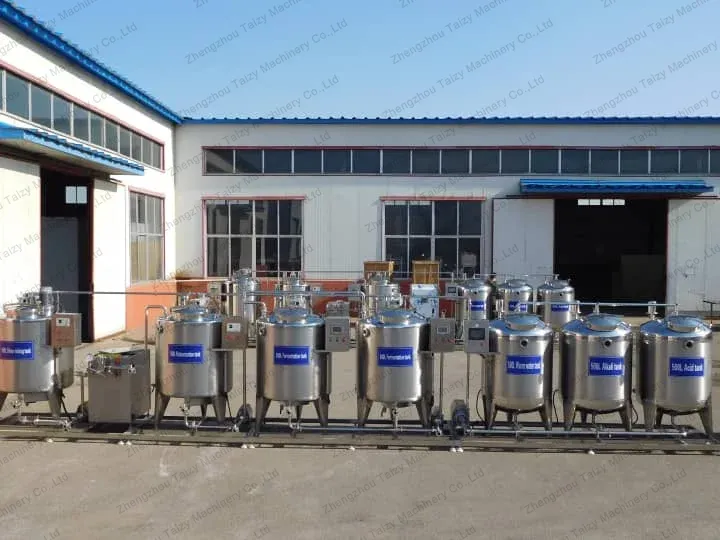
Ekipman Teknik Özellikleri
Yüksek-Shear Karıştırıcı Özellikleri
| Özellik | 300L Tank | 500L Tank | Birim |
|---|---|---|---|
| Malzeme | Paslanmaz Çelik 304 | Paslanmaz Çelik 304 | – |
| Tabaka Kalınlığı | 3 | 3 | mm |
| Güç Kaynağı | 380V/20kW | 380V/24kW | Volt/kW |
| Boyutlar | 1200×1100×1700 | 1500×1150×1900 | mm |
| Tank Çapı | 1000 | 1000 | mm |
| Tank Yüksekliği | 650 | 850 | mm |
| Karıştırma Hızı | 2840 | 2840 | r/dak |
| Isıtma Alanı | 2.5 | 2.5 | m² |
| Karıştırma Motoru | 0.55 | 0.55 | kW |
Sterilizasyon ve Fermantasyon Tankı Özellikleri
| Özellik | 300L Tank | 500L Tank | Birim |
|---|---|---|---|
| Malzeme | Paslanmaz Çelik 304 | Paslanmaz Çelik 304 | – |
| Tabaka Kalınlığı | 3 | 3 | mm |
| Güç Kaynağı | 380V/20kW | 380V/20kW | Volt/kW |
| Boyutlar | 1000×1100×1650 | 1500×1150×1900 | mm |
| Tank Çapı | 850 | 1000 | mm |
| Tank Yüksekliği | 750 | 650 | mm |
| Karıştırma Hızı | 36 | 1400 | r/dak |
| Karıştırma Motoru | 0.55 | 0.55 | kW |
| Sıcaklık Aralığı | 60-90 | 60-90 | °C |
| Malzeme Giriş/Çıkış | DN38 | DN38 | mm |
Homojenizatör Özellikleri
| Özellik | 500L Homojenizatör | Birim |
|---|---|---|
| Akış Hızı | 500 | L/h |
| Maksimum Basınç | 25 | MPa |
| Çalışma Basıncı | 20 | MPa |
| Motor Gücü | 4 | kW |
| Boyutlar | 1010×616×975 | mm |
| Malzeme | Paslanmaz Çelik 304 | – |
| Gerilim | 380V/50Hz | – |
Doldurma Makinesi Özellikleri
| Özellik | Disk Tipi Doldurucu | Birim |
|---|---|---|
| Boyutlar | 1300×1300×1750 | mm |
| Doldurma Kapasitesi | 50-300 | ml |
| Üretim Kapasitesi | 800-1000 | kupa/saat |
| Malzeme | Paslanmaz Çelik 304 | – |
| Disk Hızı | 13-16 | kupa/dakika |
| Ağırlık | 200 | kg |
CIP Temizleme Sistemi Özellikleri
| Özellik | 300L CIP Sistemi | 500L CIP Sistemi | Birim |
|---|---|---|---|
| Malzeme | Paslanmaz Çelik 304 | Paslanmaz Çelik 304 | – |
| Kalınlık | 2-3 | 2-3 | mm |
| Güç Kaynağı | 380V/20kW×3 | 380V/20kW×3 | Volt/kW |
| Kontrol | Manuel vanalar | Manuel vanalar | – |
| Tanklar Dahil | Asit Alkali Sıcak su | Asit Alkali Sıcak su | – |
Toz Yeniden Yapılandırılmış Süt Yoğurdu Üretim Hattı Avantajları
| Avantaj | Açıklama | İşletmeye Etkisi |
|---|---|---|
| Esnek Üretim | Tam yağlı süt ve yağsız süt formülleri arasında geçiş yapabilir | Piyasa talebine kolayca uyum sağlar |
| 2. Tutarlı Kalite | Otomatik süreç kontrolü, parti başına tutarlılık sağlar | Daha yüksek müşteri memnuniyeti |
| 3. Yüksek Verimlilik | 800-1000 kupa/saat doldurma hızı | Birim başına daha düşük üretim maliyeti |
| 4. Kolay Temizlik | CIP sistemi, sökmeden temizlik sağlar | İşçilik ve duruş sürelerini azaltır |
| 5. Alan Tasarrufu | Kompakt ekipman tasarımı | Daha düşük fabrika kiralama maliyetleri |
| 6. Hijyenik Tasarım | 304 paslanmaz çelik yapım | Gıda güvenliği standartlarını karşılar |
| 7. Enerji Verimli | Optimize edilmiş ısıtma ve soğutma sistemleri | Daha düşük enerji faturaları |
| 8. Kolay İşletim | PLC dokunmatik ekran kontrolü | Çalışan için minimum eğitim gereklidir |
Yaygın Sorunlar & Çözüm
| Sorun | Neden | Çözüm |
|---|---|---|
| Ayrım | Yetersiz homojenizasyon | Basıncı 25 MPa'ya artırın |
| Kırık Doku | Eksik toz çözünürlüğü | Karıştırma süresini uzatın, sıcaklığı artırın |
| Yavaş Fermantasyon | Soğuk süt veya eski kültür | İnkübasyon sıcaklığını kontrol edin, taze kültür kullanın |
| Yavaş Fermantasyon | Yetersiz katı madde veya aşırı fermantasyon | Toz oranını ayarla, fermantasyon süresini azalt |
| Ayrık Tat | Kontaminasyon veya eski süt | Hijyen geliştirin, taze süt tozu kullanın |
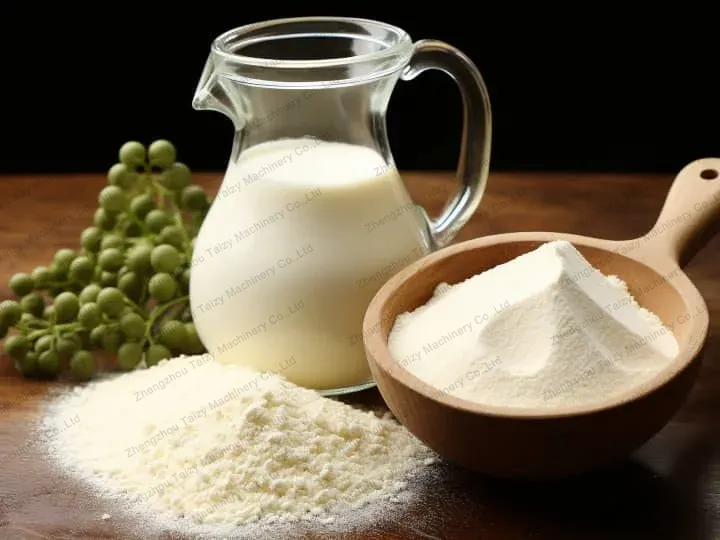
Süt Tozunu Yoğurt Yapmanın Avantajları Nelerdir?
Taze süt kullanımıyla karşılaştırıldığında, süt tozunu hammadde olarak kullanmak, birçok avantaj sağlar ve endüstriyel ölçekli yoğurt üretimi için tercih edilen seçenektir.
- Stabil ve Tutarlı Hammadde Kalitesi: Taze sütün bileşimi, mevsime, meraya ve hayvan yemi kullanımı gibi faktörlere bağlı olarak değişir. Buna karşılık, süt tozu, yağ ve protein seviyelerinin hassas ayarlanmasını sağlayan standartlaştırma işlemi görür, böylece her parti yoğurdun tutarlı doku ve lezzet profiline sahip olmasını sağlar.
- Daha Düşük Maliyetler ve Daha Kolay Taşıma: Süt tozu oda sıcaklığında stabil kalır, bu da taşımayı önemli ölçüde kolaylaştırır ve maliyetleri düşürür; ayrıca çok daha uzun raf ömrüne sahiptir. Yerel süt kaynaklarının sınırlı olduğu veya lojistik ağların henüz gelişmekte olduğu bölgelerde, süt tozu genellikle tek uygun hammadde seçeneği olarak öne çıkar.
- Üretim Esnekliği ve Formül Kontrolü: Süt tozunu hammadde olarak kullanmak, üreticilerin yoğurt ürünlerini belirli pazar taleplerine göre “özelleştirmesine” olanak tanır. Toplam katı madde içeriğini artırarak yoğurdun kalınlığını yükseltebilir, yağ seviyelerini ayarlayarak daha pürüzsüz bir ağız hissi sağlayabilir veya peynir altı suyu proteini ekleyerek toplam protein içeriğini artırabilir.
- Stabil ve Kesintisiz Üretim: Taze süt tedarikleri, mevsimsel faktörler ve meradan elde edilen ürünler nedeniyle zaman zaman üretim gecikmelerine neden olabilir. Ancak, süt tozu kullanımı, yıl boyunca kesintisiz üretim sağlar, mevsimsel süt kıtlığı endişelerini ortadan kaldırır.
- Geliştirilmiş Gıda Güvenliği Güvencesi: Toz kurutma işlemi sırasında, süt tozu sterilizasyon aşamasından geçer, böylece mikrobiyolojik güvenlik üzerinde daha fazla kontrol sağlar. Bu, üreticilerin Avrupa Birliği ve Amerika Birleşik Devletleri gibi yüksek standartlara uygun ihracat standartlarını daha kolay karşılamasına olanak tanır.
Süt Tozu Yoğurt Üretim Hattı Yatırım Düşünceleri
300L-500L yeniden yapılandırılmış süt yoğurdu üretim hattına yatırım yaparken, bu faktörleri göz önünde bulundurun:
Üretim Ölçeği Uygunluğu
Başlangıçlar için 300L hattı tercih edin; günlük 500-1000L kapasite ihtiyacı olanlar için 500L hattını seçin. Bu yoğurt üretim hattı süt tozu çözümü, küçük ölçekli yoğurt üretim işletmeleri için idealdir, başlangıç yatırımını minimize ederken kaliteyi korur.
2. Hammadde Mevcudiyeti
Yüksek kaliteli süt tozunun güvenilir tedarikçisini sağlayın. Ulaşım maliyetlerini azaltmak ve tazeliği sağlamak için yerel kaynakları düşünün. Afrika'daki süt işleme ekipmanları için, toz süt çözümleri özellikle önemlidir, çünkü yerel süt kaynakları sınırlıdır.
3. Yoğurt İşleme Tesisi Maliyeti
Toz ve taze süt çözümleri arasındaki yoğurt işleme tesis maliyetlerini karşılaştırın. Toz hattı, genellikle daha düşük başlangıç yatırımı gerektirir, çünkü altyapı ihtiyaçları daha azdır (soğuk zincir yok, daha küçük depolama alanları).
4. Yoğurt Yapım Makinesi Fiyatı
Yeniden yapılandırılmış süt yoğurdu üretim hattı fiyatını değerlendirirken, karıştırma, sterilizasyon, fermantasyon ve CIP temizliği dahil olmak üzere tüm sistemi göz önünde bulundurun. Toz çözüm, daha basit altyapı gereksinimleri ve daha düşük operasyonel karmaşıklık nedeniyle genellikle daha iyi değer sunar.
5. Satış Sonrası Destek
Choose an equipment supplier with reliable after-sales service, including installation support, operator training, and spare parts availability. For small-scale yoğurt üretimi in developing markets, local service support is critical.
Sonuç: Toz Yoğurdu Üretimini Neden Seçmelisiniz
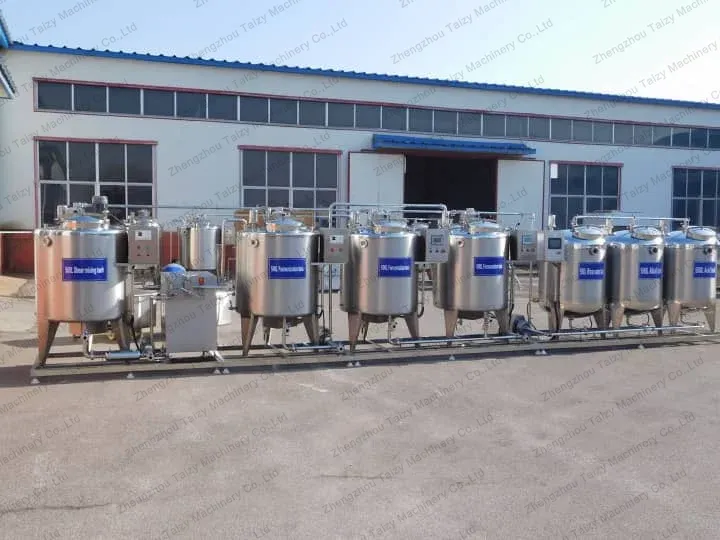
300L-500L toz yoğurt üretim hattı, süt tozundan yoğurt üretimi yapan süt üreticilerine esnek, verimli ve maliyet etkin bir çözüm sunar. Süt tozundan mamul ürünlere kadar, tüm süreç tutarlı kalite, yüksek verimlilik ve kolay kullanım sağlar.
Bu yeniden yapılandırılmış süt yoğurdu üretim hattı çözümü, Afrika ve diğer gelişmekte olan pazarlarda küçük ölçekli yoğurt üretimi için özellikle idealdir; burada süt işleme ekipmanlarının güvenilir, maliyet etkin ve kullanımı kolay olması gerekir.
Yoğurt üretimine başlamak ister misiniz? Taizy ile iletişime geçin, ücretsiz danışmanlık ve üretim hedeflerinize, yoğurt işleme tesisi maliyetine ve yoğurt yapım makinesi fiyatına göre özelleştirilmiş ekipman önerileri alın.
Ayrıca, farklı üretim kapasitelerine sahip yoğurt üretim hatları da sunuyoruz; lütfen bunları görmek için bağlantıya tıklayın: