Fresh milk and juice can lose quality quickly if they are not processed under controlled conditions. For dairy and beverage businesses, pasteurization is an important step between receiving fresh raw materials and moving products into further processing, filling, storage, or distribution.
A pasteurization machine uses controlled heating and cooling to reduce unwanted microorganisms while helping manufacturers maintain a more consistent processing process. It can be used for milk, fruit juice, and other suitable liquid food products.
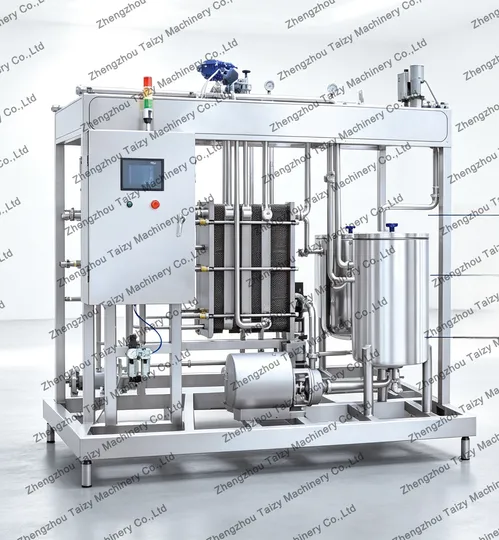
Why Do Fresh Milk and Juice Need Controlled Heat Treatment?
Fresh milk and freshly extracted juice naturally contain microorganisms. If processing conditions are poorly controlled, microbial growth can affect product quality and shorten its usable storage period.
Manual heating can be difficult to manage consistently, especially when production volume increases. Operators need to monitor temperature, heating time, and cooling conditions while also handling other production tasks.
A milk pasteurizer provides a more controlled way to manage this stage.
Instead of relying entirely on manual temperature monitoring, the processing system can maintain the required heating and cooling conditions according to the product and process requirements.
What Does a Pasteurization Machine Do?
The basic purpose of milk pasteurization equipment is to heat a liquid product to a controlled temperature for a specified period and then cool it.
The exact temperature and holding time depend on the product, process design, and applicable food-processing requirements. Therefore, pasteurization should not be treated as one fixed temperature setting for every product.
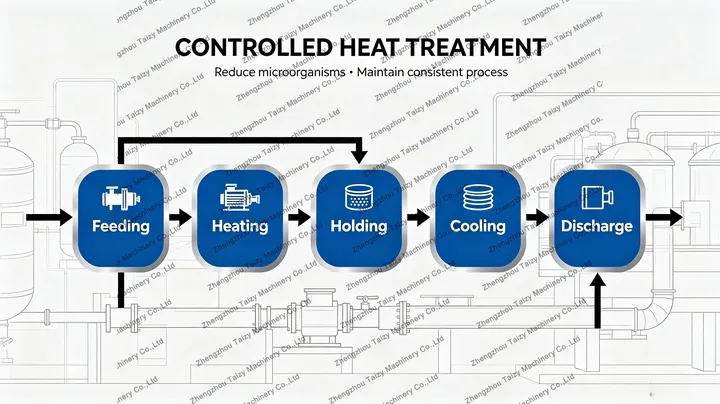
A typical process can be understood as:
Feeding → Heating → Holding → Cooling → Discharge
The controlled process helps reduce microbial risks while preparing the liquid for subsequent processing or packaging.
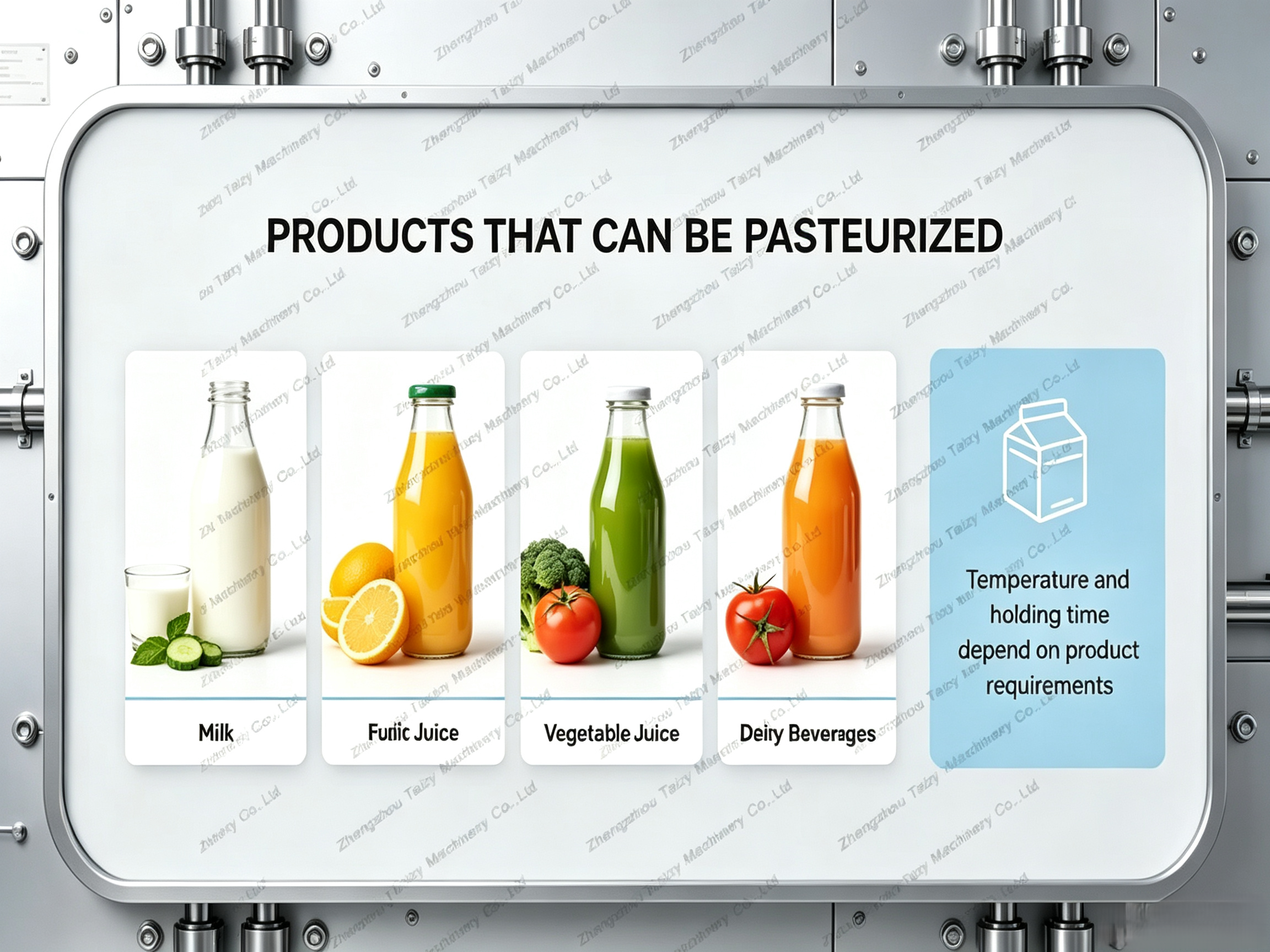
What Products Can Be Pasteurized?
Pasteurization equipment can be used for a variety of liquid food products, depending on the machine configuration.
Common applications include:
| Product | Typical processing purpose |
|---|---|
| 우유 | Dairy processing before further production or filling |
| Fruit juice | Controlled heat treatment before packaging |
| Vegetable juice | Processing of suitable liquid vegetable products |
| Dairy beverages | Heat treatment before downstream processing |
| Other liquid foods | The application depends on product characteristics |
For dairy businesses, pasteurization can be an important stage before processes such as homogenization, fermentation, or yogurt production.
For juice processors, it can be positioned before filling and packaging.
Where Does Pasteurization Fit in a Dairy Production Line?
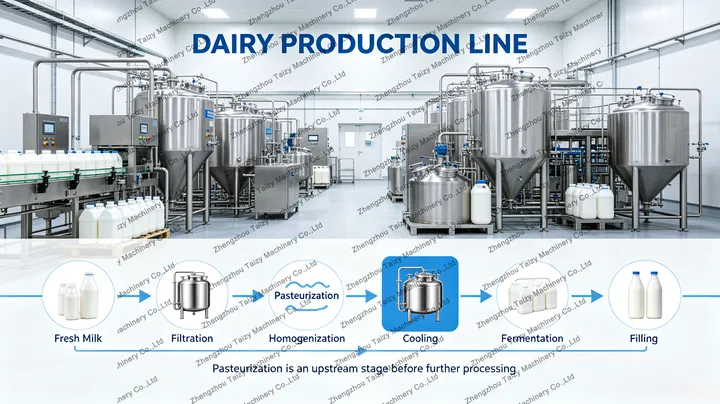
For a dairy business producing yogurt or other milk-based products, pasteurization is usually one of the important upstream processing stages.
A simplified yogurt processing flow can be:
Fresh Milk → Filtration → Pasteurization → Homogenization → Cooling → Fermentation → Filling
This means a pasteurization machine can work together with a yogurt production line rather than operating separately.
For juice processing, the arrangement may be different depending on the product:
Fresh Fruit → Juice Extraction → Filtration → Pasteurization → Cooling → Filling
The actual process should be designed according to the characteristics of the raw material and final product.
Build a More Complete Liquid Food Processing Line
For businesses processing milk, yogurt, fruit juice, or other liquid products, the right pasteurization equipment should match the rest of the production line.
We can provide a suitable pasteurization machine configuration based on your product, required capacity, heating method, and downstream equipment. If you are planning a dairy or juice processing project, contact us with your raw material and target output to discuss the appropriate solution.