Proper yogurt machine maintenance is essential for food safety, product quality, and equipment longevity. Without regular care, dairy processing equipment can develop bacterial contamination, suffer premature wear, and require costly repairs.
This comprehensive guide outlines a detailed maintenance schedule and offers troubleshooting advice, designed to help keep your yogurt production line running smoothly for 10 to 15 years.
Why Maintenance Matters for Yogurt Equipment
Dairy processing equipment operates in challenging conditions—high temperatures, acidic environments, and constant moisture. Without proper maintenance, you risk:
- Food safety issues: Bacterial growth, contamination risks, product recalls
- Reduced efficiency: Lower production capacity, inconsistent product quality
- Equipment failure: Unexpected breakdowns, production downtime
- Shortened lifespan: Equipment lasting 5 years instead of 15 years
- Higher costs: Emergency repairs cost 3-5x more than preventive maintenance
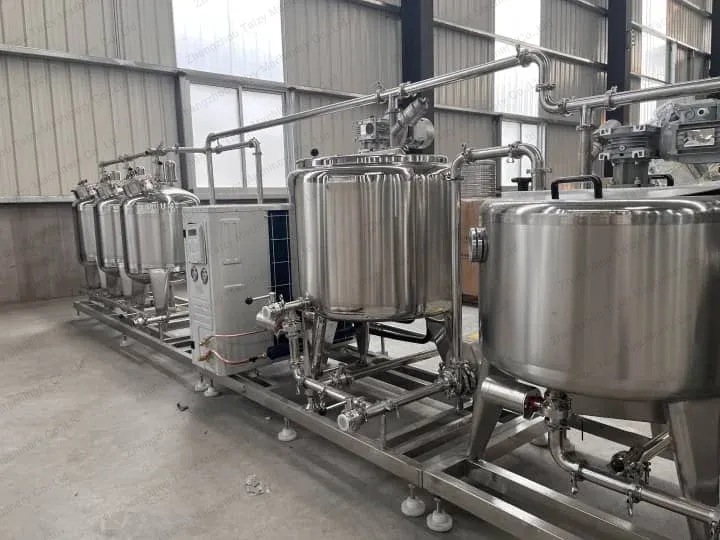
Daily Yogurt Machine Maintenance Routine (30-60 Minutes)
End-of-day cleaning is the most critical maintenance task. Follow this procedure after each production batch:
Step 1: CIP Cleaning Cycle (Cleaning-in-Place)
CIP is the gold standard for dairy equipment cleaning. The automated cycle removes organic residue without disassembly:
- Pre-rinse (5 min): Flush with warm water (40-50°C) to remove loose debris
- Alkali wash (15-20 min): Circulate 1-2% NaOH solution at 70-80°C to dissolve proteins and fats
- Intermediate rinse (5 min): Flush with clean water to remove alkali
- Acid wash (10-15 min): Circulate 0.5-1% nitric acid at 60-70°C to remove mineral deposits
- Final rinse (5 min): Flush with clean water until pH is neutral (6.5-7.5)
- Sanitization (10 min): Optional—circulate food-grade sanitizer for extra protection
Step 2: Visual Inspection Checklist
| Component | What to Check | Action if Problem Found |
|---|---|---|
| Seals & Gaskets | Cracks, wear, deformation | Replace immediately |
| Hoses & Pipes | Leaks, kinks, discoloration | Repair or replace |
| Electrical connections | Loose wires, corrosion | Tighten or replace |
| Temperature sensors | Accuracy within ±0.5°C | Calibrate or replace |
| Stainless steel surfaces | Scratches, pitting, rust spots | Polish or re-passivate |
Step 3: Lubrication Points
- Pump bearings: Food-grade lubricant every 8 hours of operation
- Agitator shaft: Check seal lubrication weekly
- Valve stems: Silicone grease monthly
- Conveyor chains: Food-grade chain oil weekly
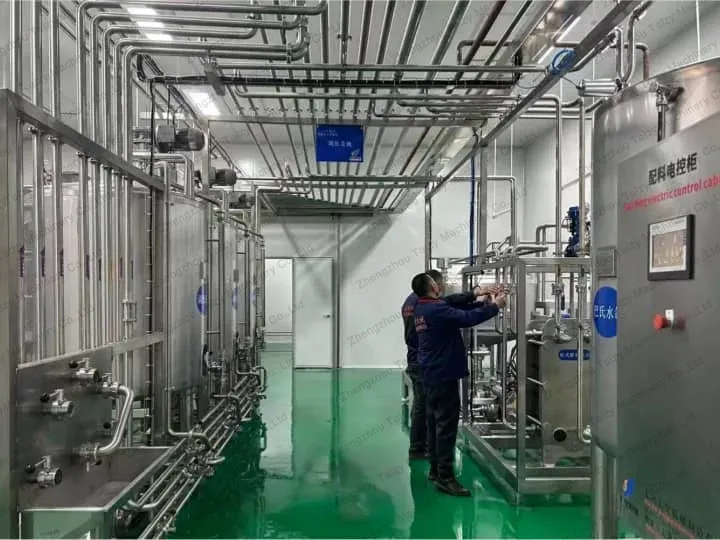
Weekly Maintenance (2-3 Hours)
Deep Cleaning Tasks
- Disassemble filling heads: Soak in cleaning solution, inspect nozzles for clogs
- Clean heat exchanger plates: Remove and brush clean if accessible
- Inspect tank interiors: Check for residue buildup, clean manways and ports
- Clean control panels: Dust and moisture removal from electrical enclosures
- Drain and clean condensate: Remove water from the air compressor and air lines
| Parameter | Standard | Testing Method |
|---|---|---|
| Temperature | ±0.5°C accuracy | Check against the certified gauge |
| Pressure | ±0.01 MPa accuracy | Check against certified gauge |
| Flow rate | ±2% accuracy | Timed volume measurement |
| pH meter | ±0.1 pH accuracy | Buffer solution calibration |
Monthly Maintenance (4-6 Hours)
| Component | Replacement Interval | Signs of Wear |
|---|---|---|
| Seals & Gaskets | Every 6-12 months | Cracking, hardening, leaks |
| Teat cup liners | Every 2,500 milkings | Cracks, discoloration, reduced suction |
| Pump impellers | Every 2-3 years | Reduced flow, vibration, noise |
| Valve diaphragms | Every 12-18 months | Tears, deformation, sticking |
| Filter screens | Every 3-6 months | Clogging, damage, corrosion |
| Bearings | Every 3-5 years | Noise, vibration, overheating |
System Performance Testing
- Heat Transfer Efficiency: Measure heating/cooling times, compare to baseline
- Homogenizer Pressure: Verify consistent 20-25 MPa output
- Automation Functions: Test all sensors, alarms, and safety interlocks
- Documentation Review: Update maintenance logs, track component lifecycles
Common Problems & Troubleshooting
| Problem | Possible Causes | Solution |
|---|---|---|
| Abnormal noise | Worn bearings, loose parts, cavitation | Inspect and replace bearings, tighten connections |
| Leakage | Worn seals, overpressure, loose fittings | Replace seals, check pressure settings |
| Overheating | Poor lubrication, blocked cooling, overload | Add lubricant, clean cooling system |
| Inconsistent temperature | Faulty sensor, scale buildup, insulation damage | Calibrate sensor, descale, repair insulation |
| Reduced flow rate | Add lubricant, clean the cooling system | Clean/replace filters, inspect impeller |
| Control system errors | Electrical issues, software glitch, sensor failure | Check connections, restart system, replace sensor |
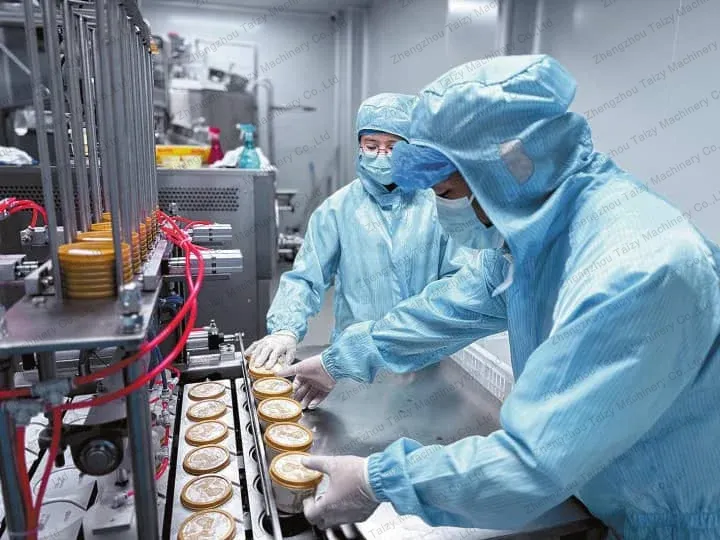
Seasonal Maintenance (Quarterly)
- Professional Inspection: Hire a certified technician for a comprehensive system check
- Electrical System: Test all motors, check insulation resistance, tighten terminals
- Refrigeration System: Check refrigerant levels, clean condensers, and inspect compressors
- Structural Integrity: Inspect welds, supports, and foundations for cracks or corrosion
- Safety Systems: Test emergency stops, pressure relief valves, and temperature limits
Maintenance Best Practices
Documentation & Record Keeping
- Maintain a Logbook: Record all maintenance activities, parts replaced, and issues found
- Track Component Lifecycles: Know when each part was installed and the expected replacement date
- Keep Spare Parts Inventory: Stock critical components: seals, gaskets, sensors, filters
- Train All Operators: Ensure everyone knows basic maintenance procedures
| Chemical | Concentration | Temperature | Contact Time |
|---|---|---|---|
| Caustic soda (NaOH) | 1-2% | 70-80°C | 15-20 minutes |
| Nitric acid | 0.5-1% | 60-70°C | 10-15 minutes |
| Chlorinated cleaner | 100-200 ppm | Ambient | 10 minutes |
| Quaternary ammonium | 200 ppm | Ambient | 10 minutes |
Cost of Maintenance vs. Neglect
Preventive maintenance is always more cost-effective than reactive repairs:
| Maintenance Approach | Annual Cost | Equipment Lifespan | Total 10-Year Cost |
|---|---|---|---|
| Preventive maintenance | $2,000-$5,000 | 12-15 years | $20,000-$50,000 |
| Reactive repairs only | $8,000-$15,000 | 5-7 years | $80,000-$150,000 |
Conclusion: Maintenance is an Investment
Regular yogurt machine maintenance isn’t an expense—it’s an investment that pays dividends through extended equipment life, consistent product quality, and reduced downtime. By following this guide’s daily, weekly, and monthly schedules, you’ll maximize your ROI and ensure food safety compliance.
Remember the best maintenance is preventive, not reactive. Schedule regular care, train your team, and keep detailed records. Your equipment will reward you with years of reliable service.
Furthermore, a high-quality set of equipment can, to a certain extent, help you reduce the frequency of maintenance. Taizy offers premium yogurt production line equipment to support the upgrading and replacement of your production lines; contact us for more information about our machinery.